Sabbath Silence in Dalhousie
It was a sultry summer afternoon, the kind that slows Kolkata down just enough to let the memories breathe. With two dear friends—Kajal and Prateeti—I made my way to the grand old lady of Dalhousie, the General Post Office. But this was not the GPO I remembered from the bustling weekdays of yore. The usual office rush was missing. Dalhousie seemed to be resting, basking in a Sabbath calm after a hectic week. Very few visitors roamed the corridors. The silence was almost eerie—defying the usual rhythm of this historic institution.


Stamps and Stories Under the Dome
We had come for the philatelic exhibition on Tagore, held in the iconic rotunda. The grandeur of the space was softened by the quiet presence of Raunak Dutta—a young, passionate collector who had curated five panels of Tagore stamps and ephemera. His eyes lit up as he spoke, sharing stories not just of stamps, but of journeys—of exhibitions, collectors, and how his fascination began. There was also a quiet sadness in his voice when he spoke of today’s children, and how children today aren’t encouraged to collect, preserve, or cherish these tiny time-traveling treasures.


Of Familiar Faces and Forgotten Ephemera
In the midst of this quiet exhibition, I was delighted to meet Moloyda—Moloy Sarkar, a renowned ephemera collector and a fellow member of our Kolkata Kathokota group. Meeting him inside the GPO felt like serendipity, like a story turning a familiar corner. The exhibition also featured a charming clay diorama showcasing the journey of the postal system—through train, boat, palanquin, and oxcart. At the center stood a solitary postal runner, embodying the pulse of communication from a distant age.
And we drained in nostalgia with the Sukanta Bhattacharya’s poem and rendered by Hemanta Mukherjee ‘s song and Kazi Sabyasachi’s recitation. We had this in our “kabyabichitra” in school.
The philatelic bureau was our next stop. I hadn’t been there in years, decades, yet everything looked achingly familiar. How often I used to come during college days to buy First Day Covers, carefully choosing and preserving them like keepsakes of time.
Then we walked into the main hall—to counter 21—to buy postcards and inland letters. The kind of paper that once carried our hopes, our applications, our future. And there it was—the echoing buzz, the massive fans spinning slowly under that towering ceiling—flooding us with memories of college and university days, of those public exam forms, of dreams typed and folded and sealed.


A Pause at Parcel Café
We paused next at Parcel Café—a new addition, we were told, though tucked neatly into the old world charm. The server was smiling, soft-spoken, and made the coffee feel warmer than usual. The café had a gift shop—humble, lacking glamour—but somehow perfect for a place drenched in history.To our delight, we ran into Eeshita Basu Roy and Souvik Roy, the incredible collector duo whose works were also on display. Such unexpected meetings, like hidden gems, add soul to an already fulfilling visit.


Columns, Courtyards, and Coined Memories
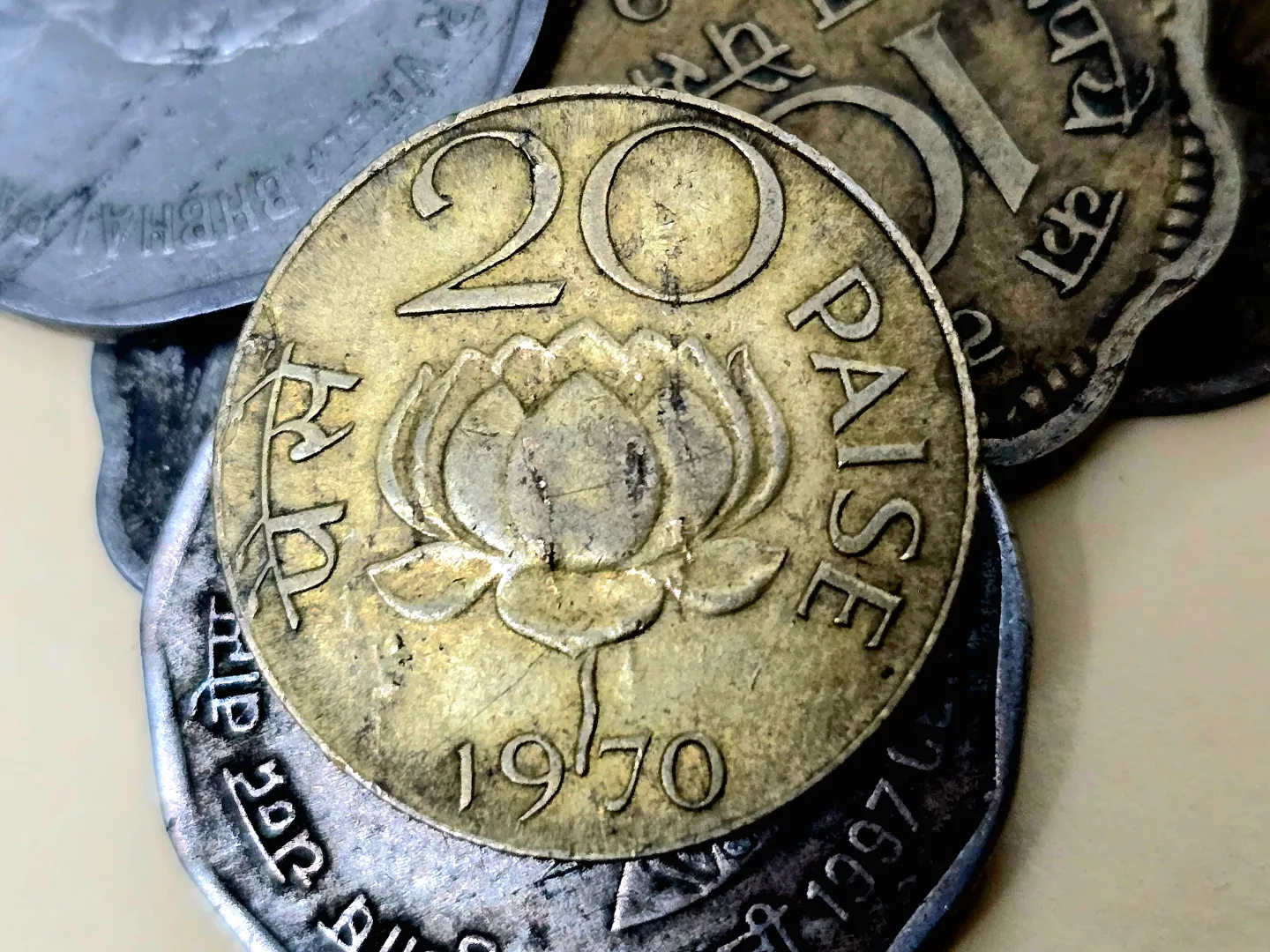
Before leaving, we walked through the building again, clicking photos of the majestic columns, the twisted staircases, and the sprawling courtyard that seemed to stretch like time itself.And then, by chance, I stumbled upon a small vendor with old coins. There it was—a 20 paisa round brass coin with a lotus. The vendor handed it to me for a small sum. But its worth? “Priceless! for everything else there is Mastercard”. It recreated something in my mind that words couldn’t quite reach. A tear escaped before I even realized.


Kolkata, Framed in a Final Glance
As we got into the car, the Royal Insurance Building stood in front like a silent witness. A yellow cab passed. A bus stopped. And at the three-point crossing, something clicked—the light, the air, the stillness. It was all perfectly aligned for a brief second, creating an image of the quintessential old Kolkata, my Kolkata, the one I hold close—etched in Dalhousie’s timeless heart leaving behind the old and the young fallen keaves.


